
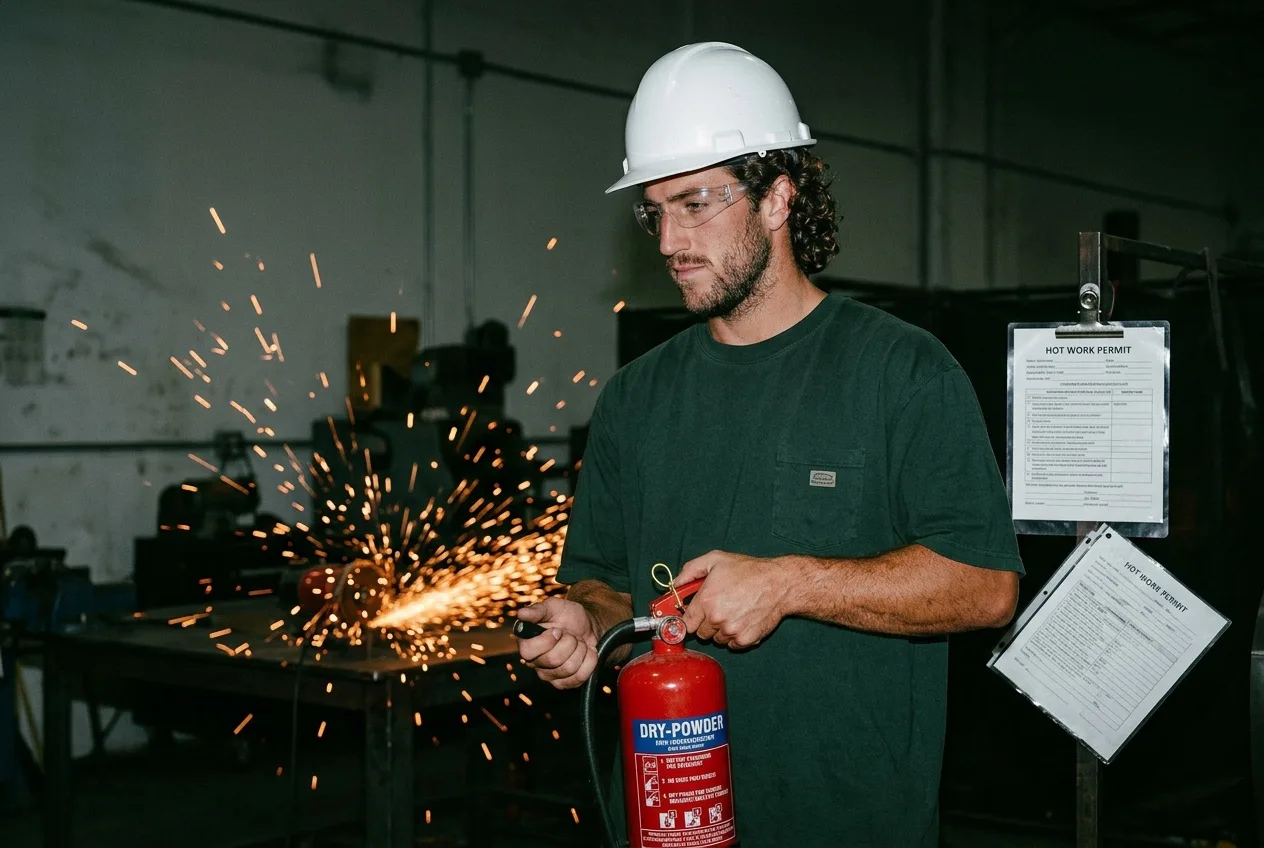
Hot Work & Fire Watch.
Permits, the 15 metre zone above and below, the fire watch role, and why the job isn't over for 30 minutes after the last spark.
Awareness course · not nationally recognised- $35 + GST
- ~65 min · online, self-paced
- Built for your phone
- Certificate the moment you finish
overview
For welders and fabricators, plumbers and roofers, maintenance crews, and the leading hands and supervisors who issue permits. Built on AS 1674.1:2025 (fire precautions for welding and allied processes), the Queensland Welding Processes Code of Practice and the harmonised WHS laws. What counts as hot work, when a permit or a checklist risk assessment is required and who signs it, the 15 metre zone above and below, remove, shield, wet down, the right extinguisher within reach, gas cylinder and acetylene safety, the fire watch role, stopping work when conditions change, the 30 minute minimum post-work observation, closing out the permit, and reporting smoulders and near misses. About an hour, online, with a 3D walkthrough of where the sparks go, three AI practice conversations and one spoken scenario. Certificate of completion.
Built for: Construction · Manufacturing.
who it’s for
- Welders and fabricators
- Plumbers and roofers
- Maintenance crews
- Leading hands and supervisors who issue permits
what’s covered
It's hot work if it sparks
3 topics- Flame, heat, spark or arc — and the surprises: brazing, soldering, torch-on membrane, hot swarf
- Permit or checklist risk assessment, never nothing — and the 5 percent of LEL rule
- The responsible officer signs, never the welder and never the fire watch; a permit dies after a 2 hour break
Before you strike
3 topics- The 15 metre zone is a sphere — through the floor and into the wall
- Remove, shield, wet down — in that order
- An ABE extinguisher within arm's reach and never more than 10 metres; flashback arrestors at both ends of both lines
Eyes on it
3 topics- The fire watch watches, and does nothing else
- Line of sight to the ignition point and to the level below — screens, wind, and when you need a second watch
- Stopping the work: fuel, drains, traffic and total fire bans
After the last spark
3 topics- Final inspection no earlier than 30 minutes — later if the risk assessment says so
- Closing out: check below and behind, fire systems back on, permit returned
- A hot work fire is a notifiable incident, even a small one that was out in seconds
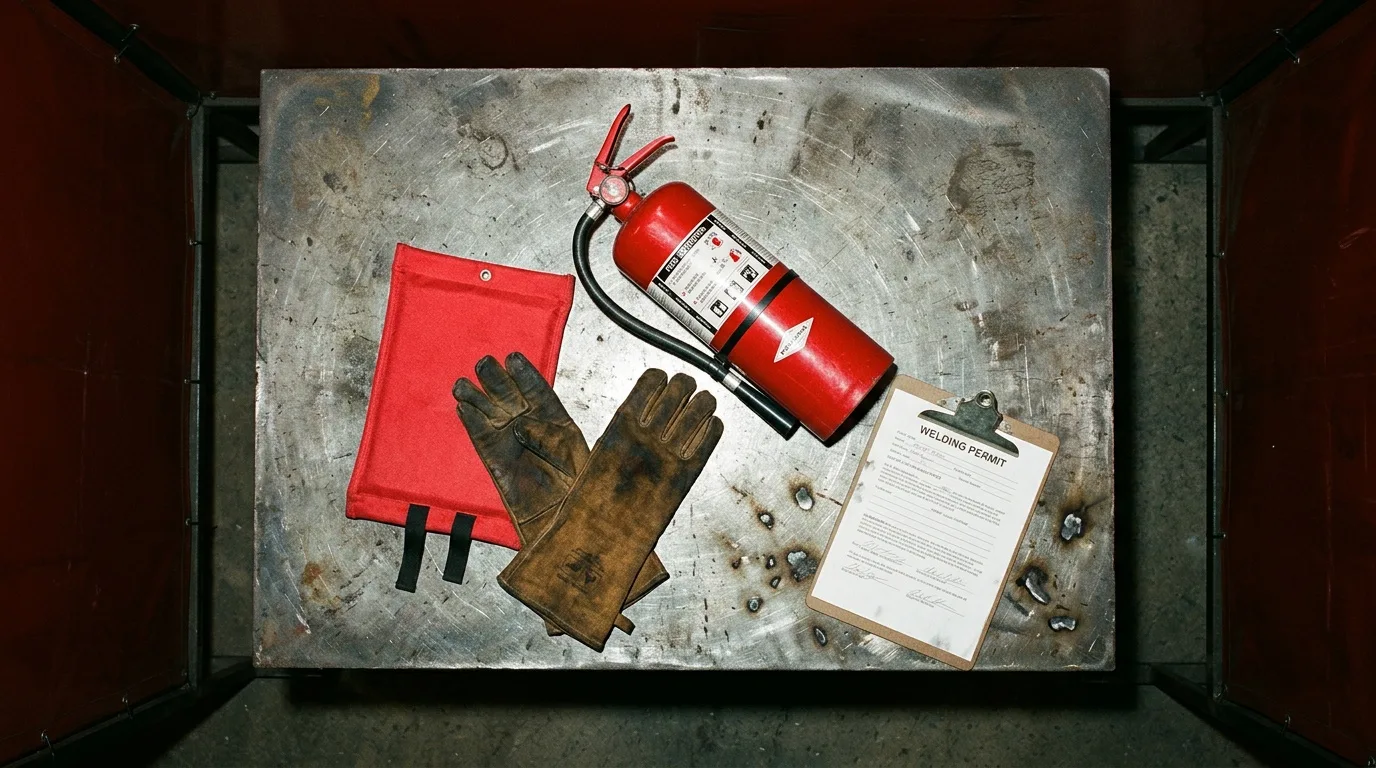
how it works
questions
Keep going.
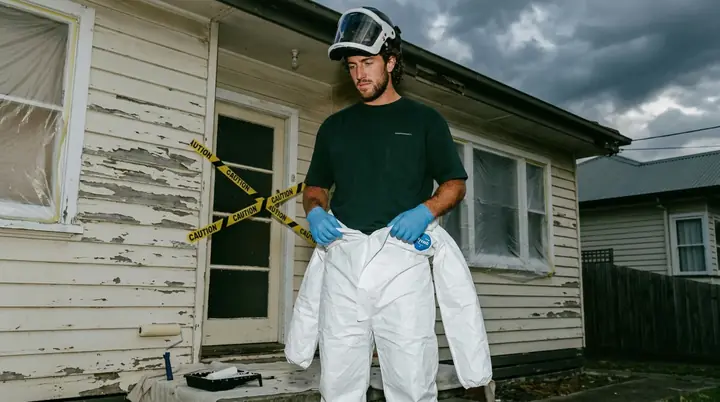 ~2 hr · online$55
Asbestos Awareness
Know what ACM is, where it hides, and when to stop work.
View course →
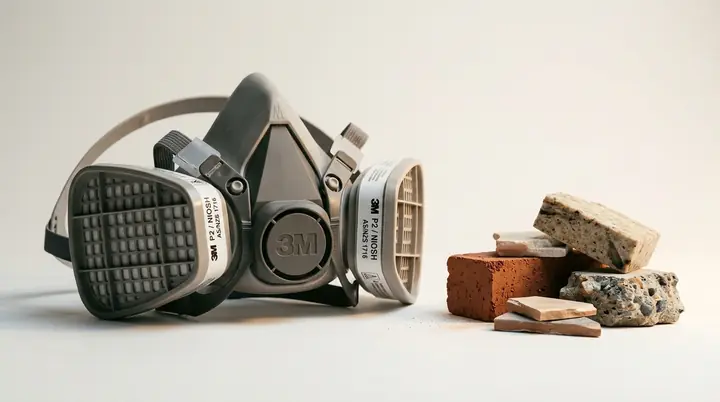 ~2 hr · online$35
Silica Awareness
Respirable crystalline silica — controls, RPE, and the engineered-stone rules.
View course →
 ~1 hr 10 min · online$35
How Electricity Works
What voltage, current and the neutral actually are, shown in 3D — from a single electron to a grid that spins at fifty hertz.
View course →
 ~1 hr · online$35
Plant & Equipment Safety
Pre-starts, guarding, exclusion zones, lockout — the machine can't see you.
View course →
 ~1 hr · online$35
Incident Response & Reporting
Notifiable incidents, the 24-hour clock, scene preservation, and who calls the regulator.
View course →
 ~1 hr · online$35
Sexual Harassment Awareness — Construction
Where banter ends and harassment starts — and how to call it on site.
View course →